Capitalism’s In-Flight Menu: Nothing’s Free Anymore
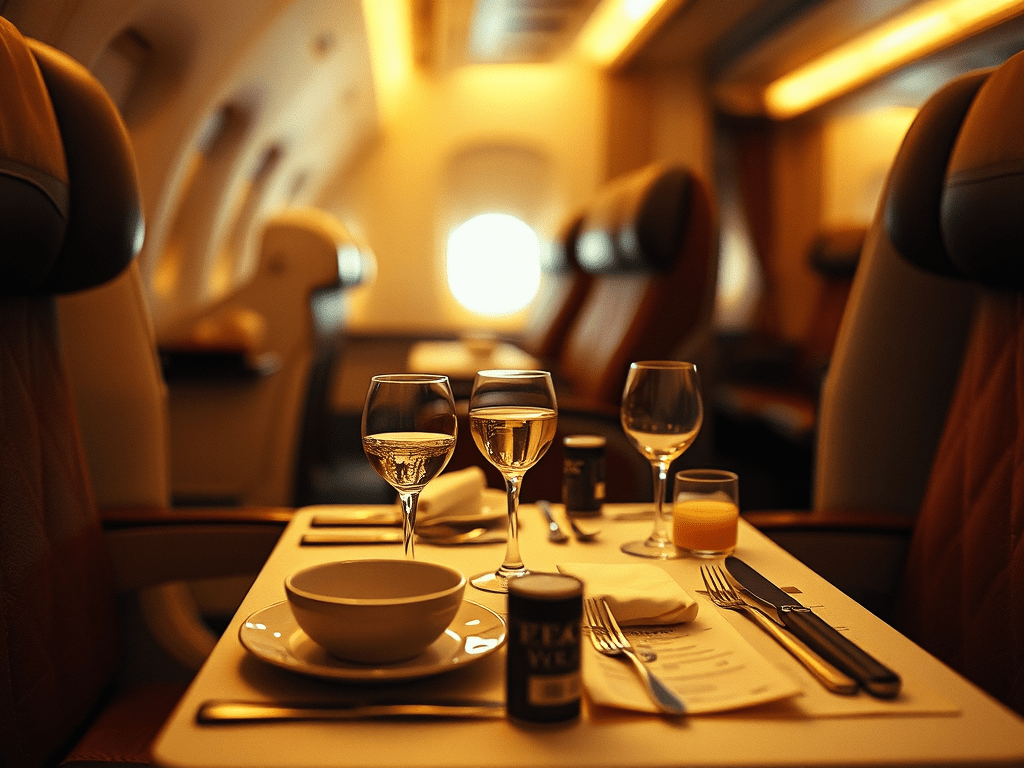
When commercial air travel took off in the mid-20th century, it was an experience wrapped in luxury. Tickets included spacious seats, full meals with drinks, complimentary pillows and blankets, and free checked baggage. Flying wasn’t just transportation — it was an event.
Fast-forward to today, and nearly every one of those “free” amenities has been stripped away and priced à la carte.
If you’ve flown recently, you already know the drill: want a meal? Pay extra. A checked bag? That’ll be $30 or more. A blanket? Sure — for a fee.
How Did We Get Here? A Timeline of the Great Unbundling
- After 9/11 (2001): Many U.S. airlines eliminated complimentary domestic meal service, citing security theater and cost-cutting—as if avoiding terrorism meant starving everyone at 30,000 feet.
- 2003–2005: Delta and United began charging for “meal boxes” on select flights.
- 2008: US Airways briefly took it further, selling bottled water and soft drinks on board—a move so unpopular it was reversed within a year.
- 2008: American Airlines led the industry in introducing checked baggage fees, soon adopted across the board.
- 2008–2009: JetBlue and later US Airways began charging for pillows and blanket sets (though you got to keep them).
Layer by layer, comfort was commodified.
The Deeper Root: Profit Maximization in a Competitive Market
This shift wasn’t just about greed in a vacuum—it was capitalism’s logic playing out under pressure.
After airline deregulation in the 1970s and the rise of ultra-low-cost carriers, competition centered on ticket price visibility. To appear cheapest on booking sites, airlines began “unbundling” services, turning perks into profit centers.
It’s a double win for them: lower advertised fares attract customers, then fees quietly boost revenue. Shareholders demand constant growth—and when you can’t easily raise ticket prices, you monetize what was once included.
But Wait—Didn’t Flying Become More Affordable?
A common counterargument is that air travel is cheaper today than decades ago, precisely because of this à la carte model. And yes, if you measure only the base fare, that’s often true.
But this ignores the true cost: the psychological toll of constant upsells, the inequity of comfort reserved for the wealthy, and the fact that for many travelers—especially those with families or needs beyond a bare seat—the all-in price has hardly dropped.
We traded dignity for discounting, and comfort for calculation.
The Great Pay Wall—and What It Says About Capitalism
This pattern is so common in our economy, it deserves a name: The Great Paywall.
It extends far beyond airlines. Capitalism has a habit of identifying what’s free, essential, or communal… and finding a way to put a price tag on it.
Think of water (bottled, privatized), software (subscriptions instead of ownership), or even attention (ad-free experiences for a fee).
I think to myself “If they could charge for air and sunlight, they would.” In some ways, they already try—from “premium air” in luxury cars to tanning salons and vitamin D supplements.
What’s especially insidious is the second-order monetization: after removing free checked bags, airlines partnered with banks to offer credit cards that… give you a “free” checked bag as a perk.
So now, to reclaim a service that was once standard, you’re encouraged to open a line of credit—potentially entering a debt cycle—just to access what used to come with the ticket.
It’s a brilliant, brutal business model: create a problem, then sell the solution.
In-Flight Conclusion (Now with Fees)
So yes, it’s “funny”—in that dark, ironic way where you laugh to keep from groaning.
What we’re witnessing isn’t just corporate cheapness. It’s the logical end point of a system that seeks to monetize every interaction, package every comfort, and turn needs into niches.
Next time you’re asked to pay $7 for a pillow at 30,000 feet… remember, it’s not just a pillow.
It’s a symbol.
You’re being sold back a piece of the sky they already convinced you to rent.
If this keeps up, I give it ten years before they start charging for the oxygen masks—and twenty before you can subscribe to “Premium Breather” status.
“Would you like to exhale for $4.99, or would you prefer the monthly plan?”
 The Legitimate Heir
Leave a comment